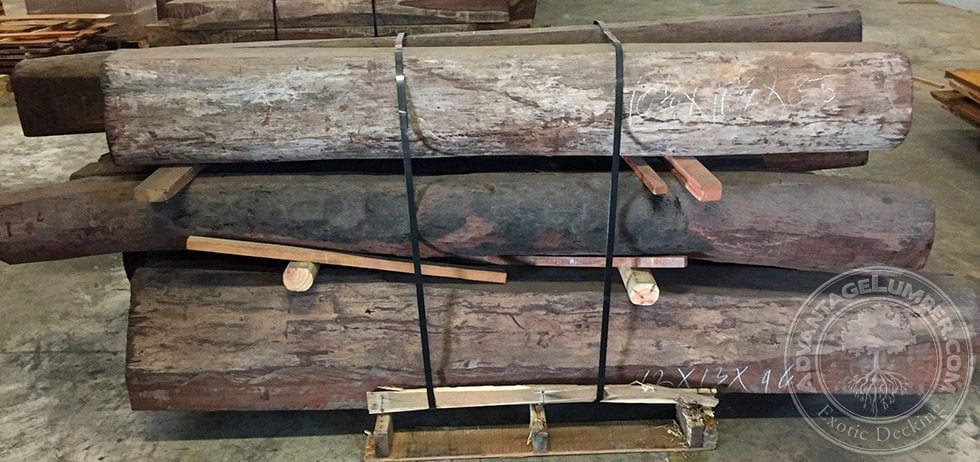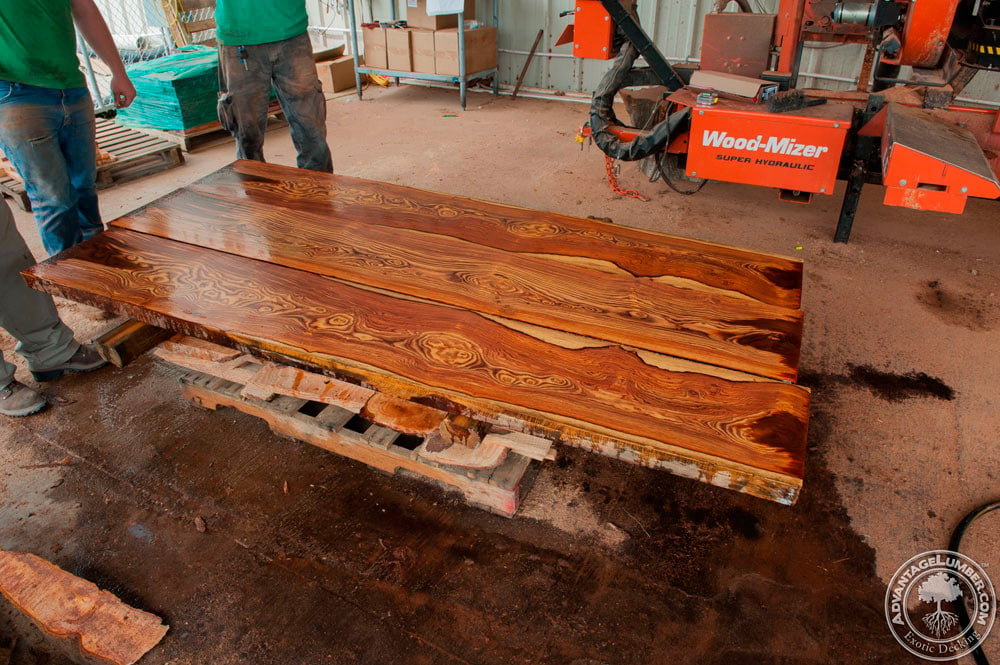
Cocobolo |
PHOTO |
 |
| DESCRIPTION |
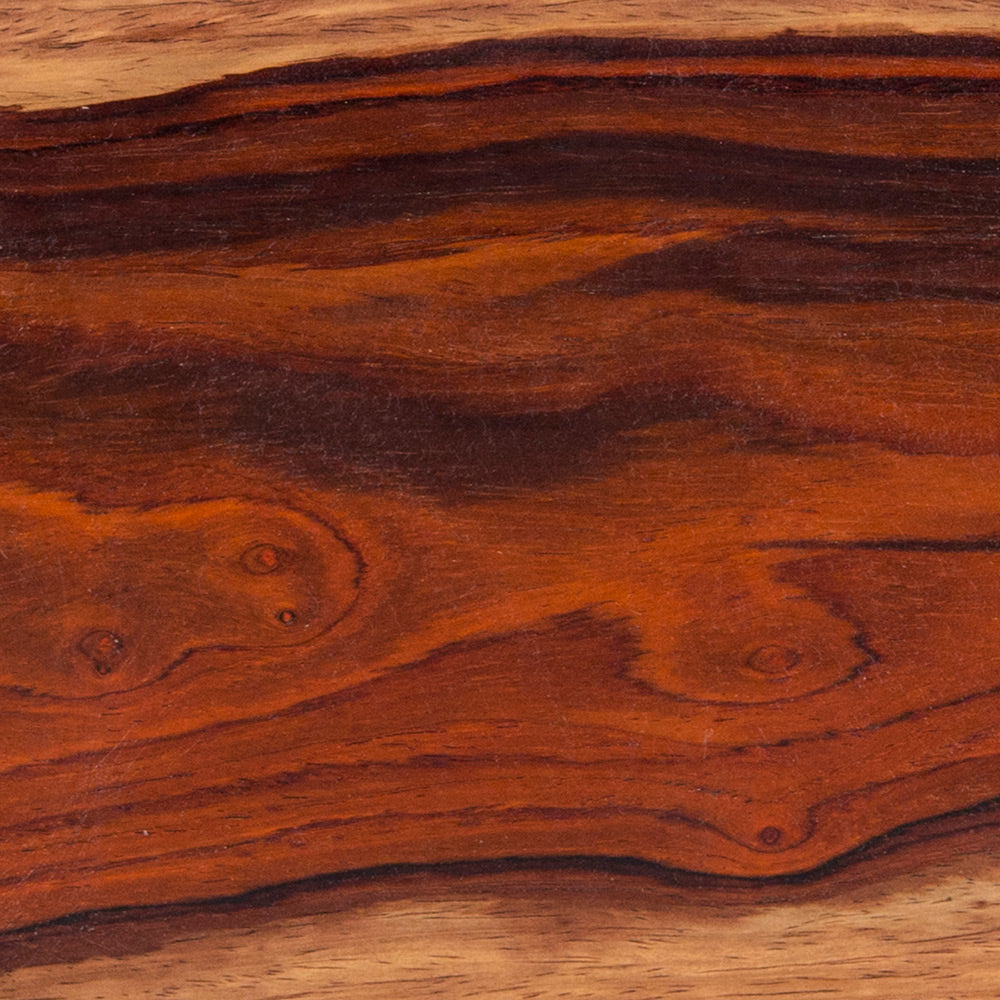
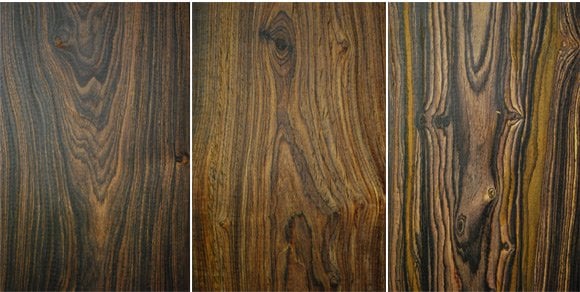
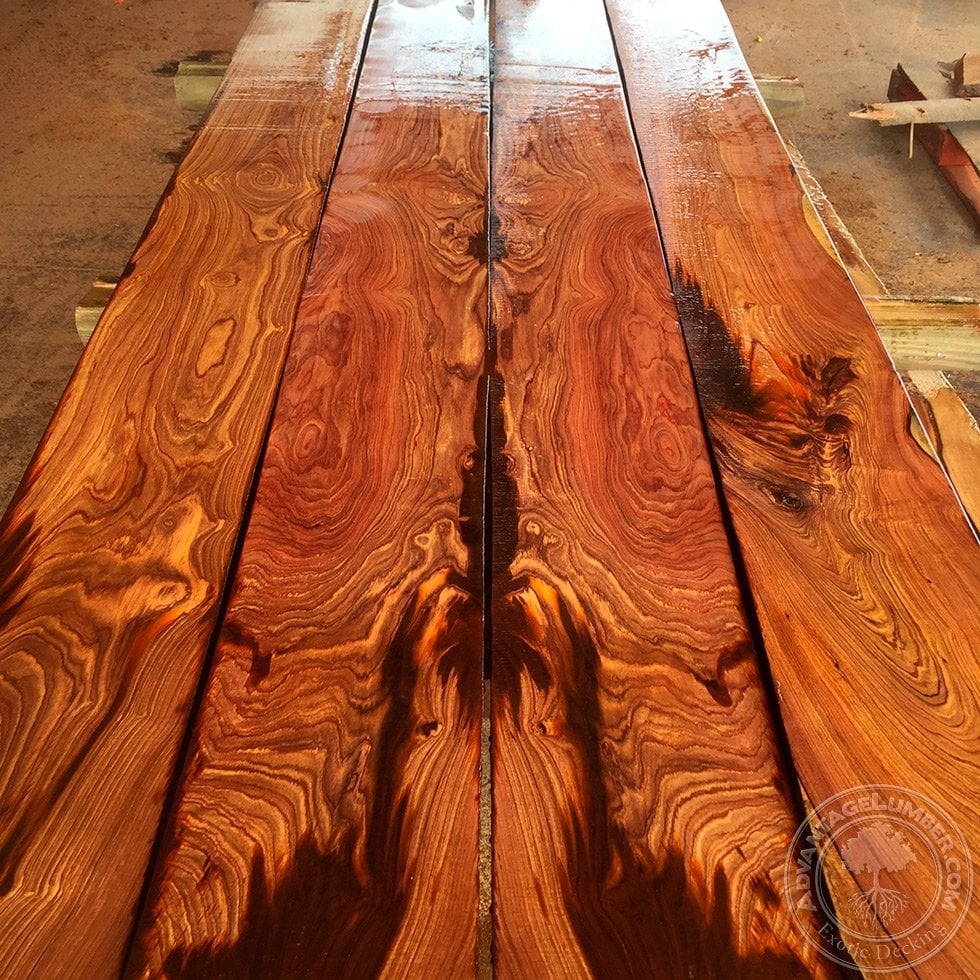
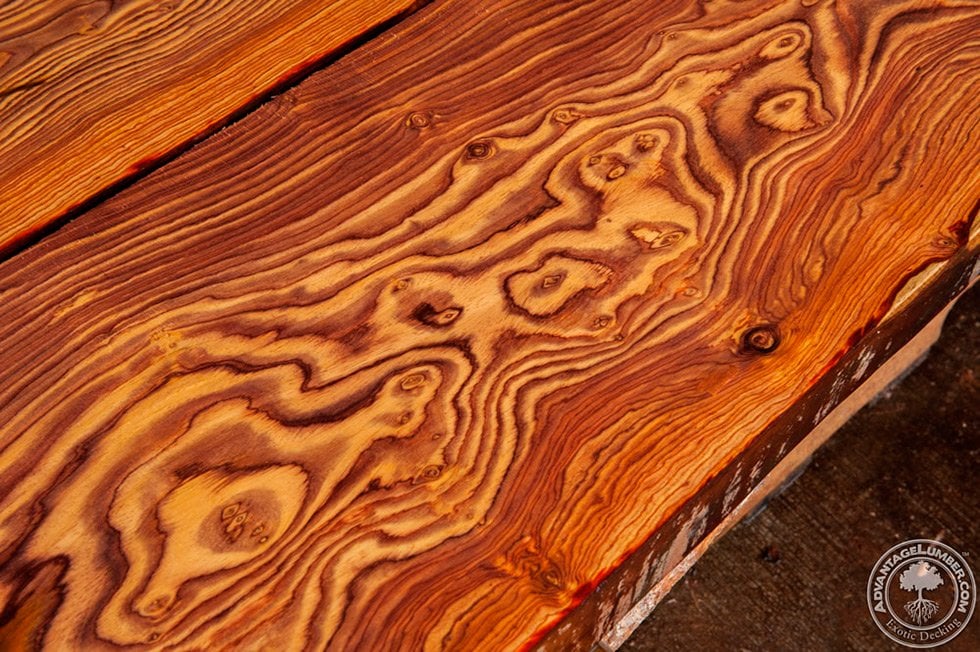
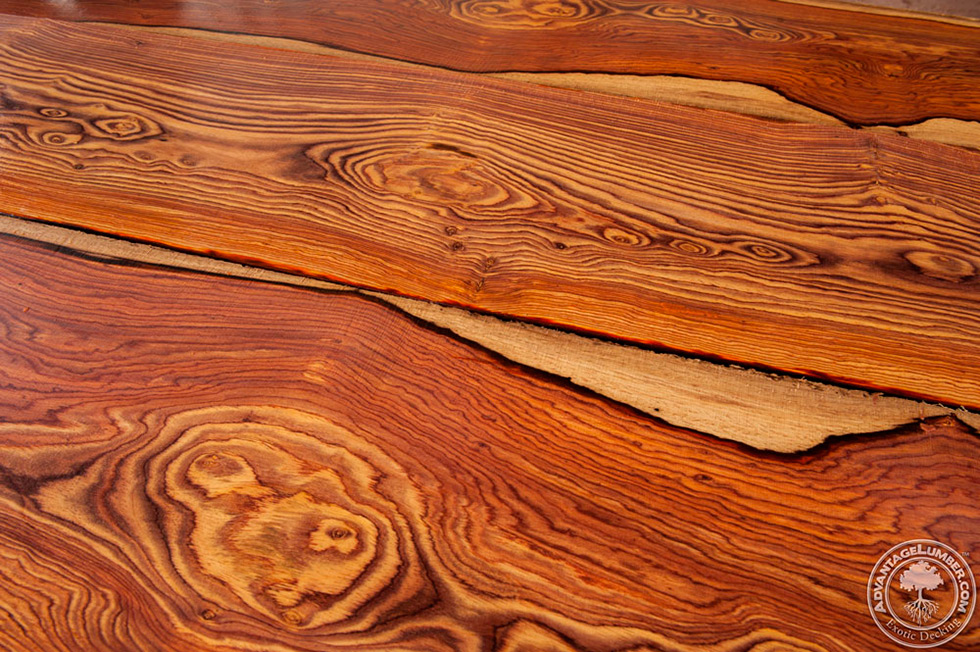
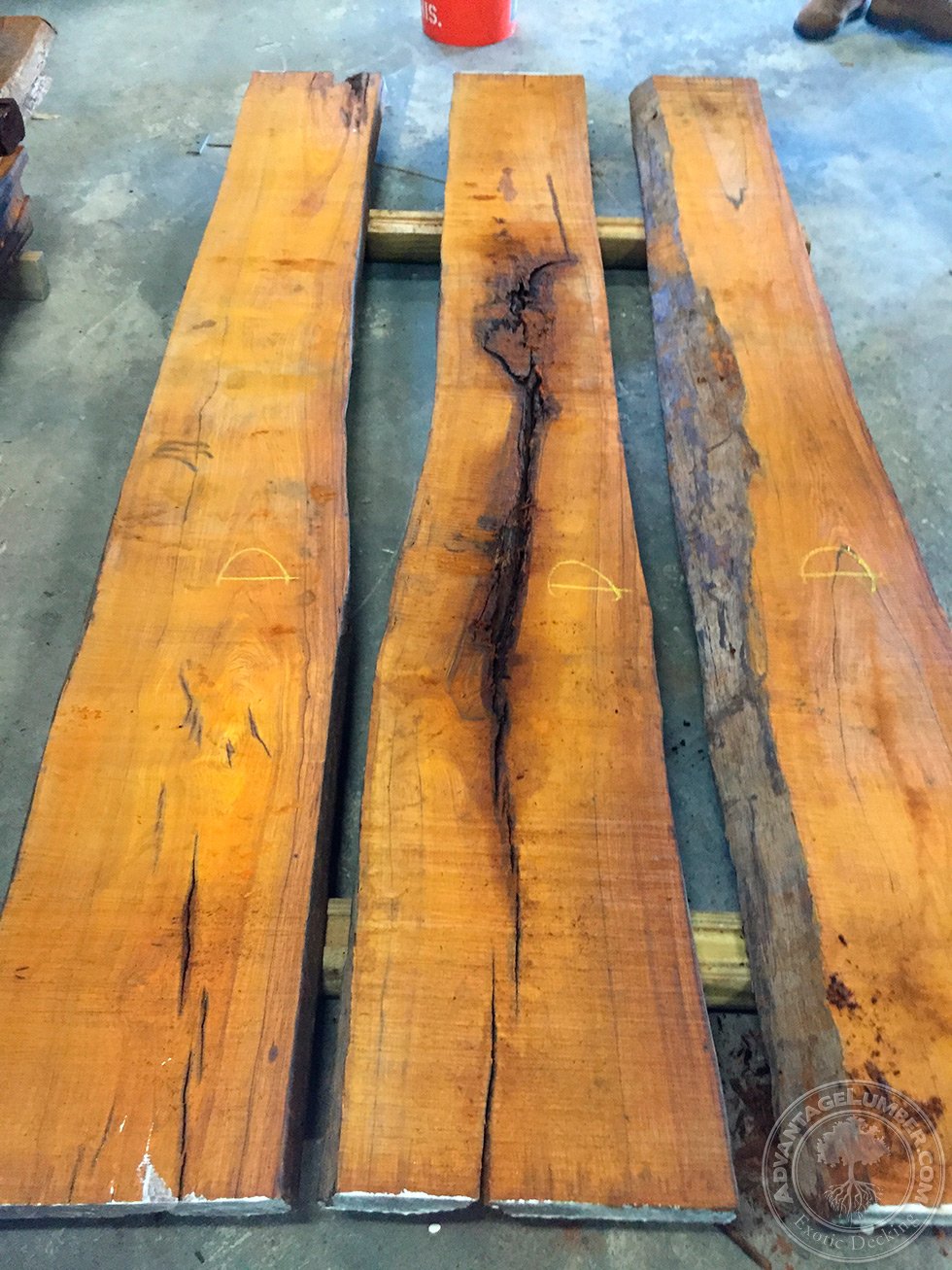
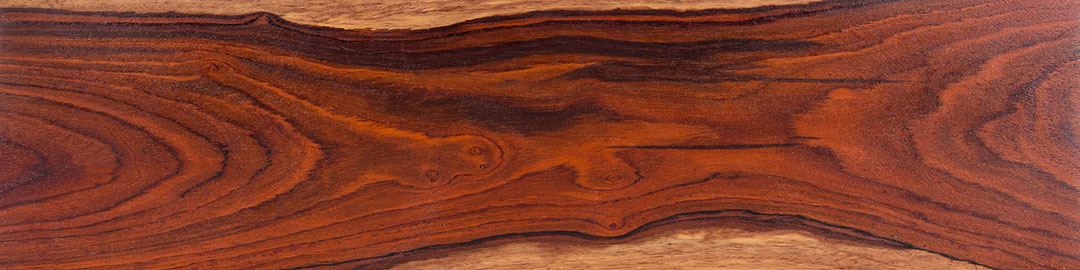
Variegated tones of red orange and purple with darker to black contrasting grain lines. Grain pattern often swirly and or burl like. Sometimes strait grained but usually in larger trees.
Weight from about 61-75 lbs per cu. ft.
Typical Width = 4" to 7"
Typical Length = 3' to 5'
Cocobolo lumber comes from three major areas. Each have their own unique characteristics:
Mexico: Mexican Cocobolo
- Kiln dries well less check prone
- Beautiful red orange with heavy black and purple lines
- Some fully purple with orange red and black lines
- Very little brown orange material
- Slow growing tight ring growth beautiful figure
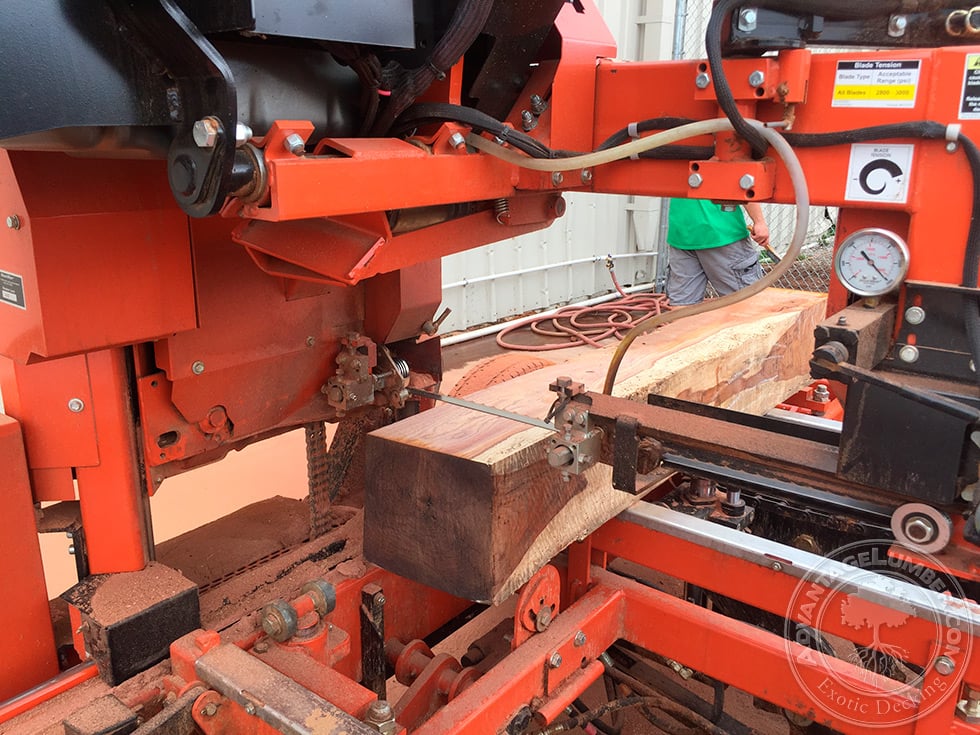
- Most material is harvested with men chainsaws and donkeys very little impact on environment
Guatamala : Guatamalan Cocobolo
- New emergence of this type recently in the past 6 or 7 years
- Less check prone than Nicaraguan
- Beautiful figure red orange color with black and purple lines
- Some material brown orange less appealing look
- Less impactful logging
Nicaragua: Nicaraguan Cocobolo
- Check prone
- More difficult to kiln dry
- Often beautiful red orange color with slight brown orange color
- Harvested with modern logging methods that impact its environment negatively
- Some is plantation grown with wider ring growth & less intense figure
|
COUNTRY OF
ORIGIN |
Mexico Central America and areas of northern South America
|
| BOTANICAL NAME |
Dalbergia Retusa or
Dalbergia Granadillo |
| OTHER NAMES |
Granadillo (Mexico) AKA Rosewood, cocobola , cocobolo rosewood |
| BIOLOGICAL INFORMATION |
- Tree flowers Jan – May and again Aug – September
- Cross pollination crucial
- Will not self pollinate
- Fire aids in germination
- Grows mostly in dry tropical highlands
- Height up to 80’
- Diameter up to 24”
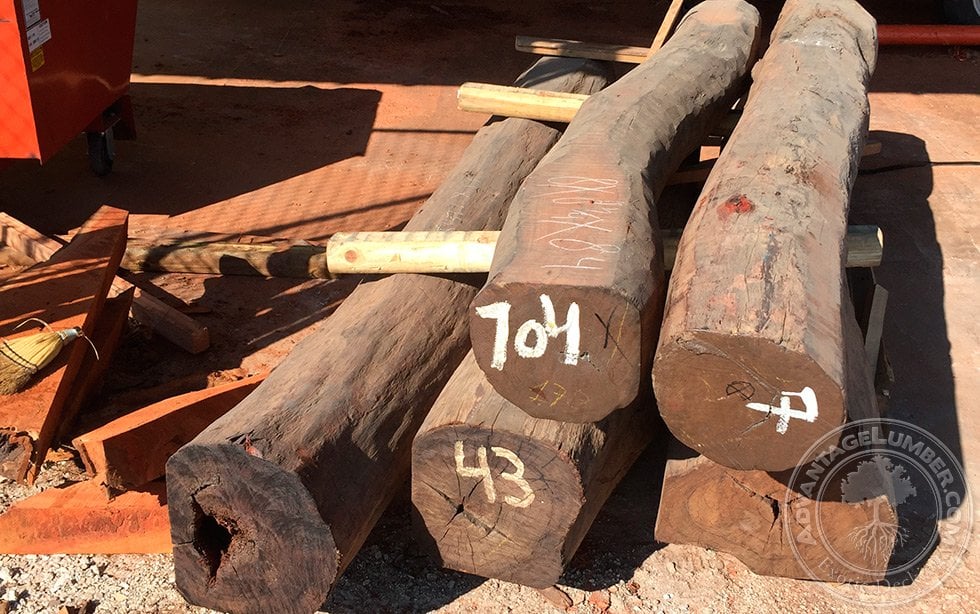
- Large diameter trees often hollow
- 5- 61/2 lbs per bf
|
| MECHANICAL PROPERTIES |
High mechanical strength in all categories. |
| WORKING PROPERTIES |
- Cocobolo machines well with sharp hand and power tools
- Moderate blunting effect on cutting edges which must be kept very sharp
- A reduced cutting angle is required for planing or moulding and the surface can be rendered very smooth to the touch
- Must be pre-drilled
- Use Epoxy for best result
- It takes stain and can be brought to an excellent finish
- Difficult to glue wipe joint w/ acetone or denatured alcohol and use 2 part epoxy for adhesive.
- Water based finish only other likely not to stick
- Swirly grain more likely to tear out
- Spiral cutters are quite effective
- Dust can be an irritant on skin or lungs
- Proper safety precautions advised
- Will darken with exposure to UV light
- Must take care to not expose to excessive dry heat
- End grain especially susceptible to checking
- Very hard to dry below 12% mc
- Quite workable at 12%- 16% mc but finished product must be kept away from excessive dry heat
- Material thicker than 2” very likely to check
- Wiping joists with acetone or denatured alcohol will decrease resin on joint surfaces
|
| DURABILITY |
Very durable and resistant to preservative treatment. |
| SEASONING |
Dries very slowly with a marked tendency to split and check. Small movement in service. |
| USES |
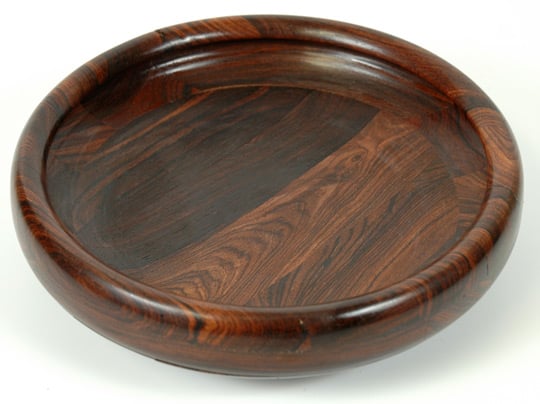
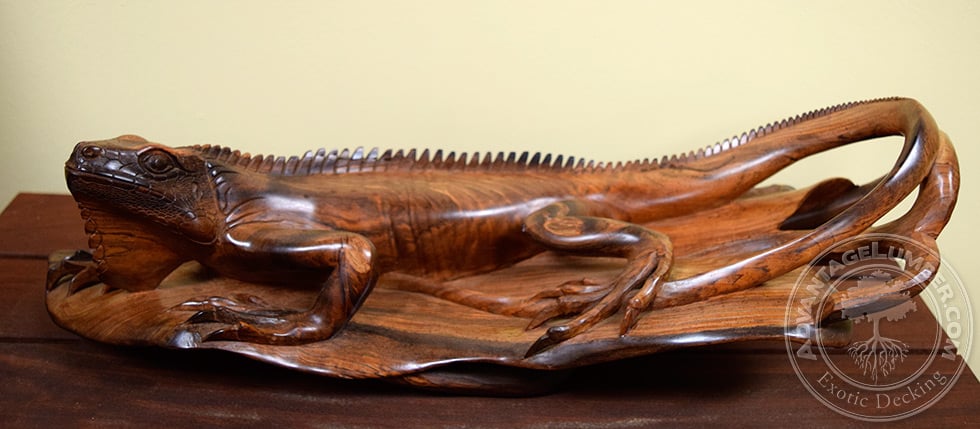
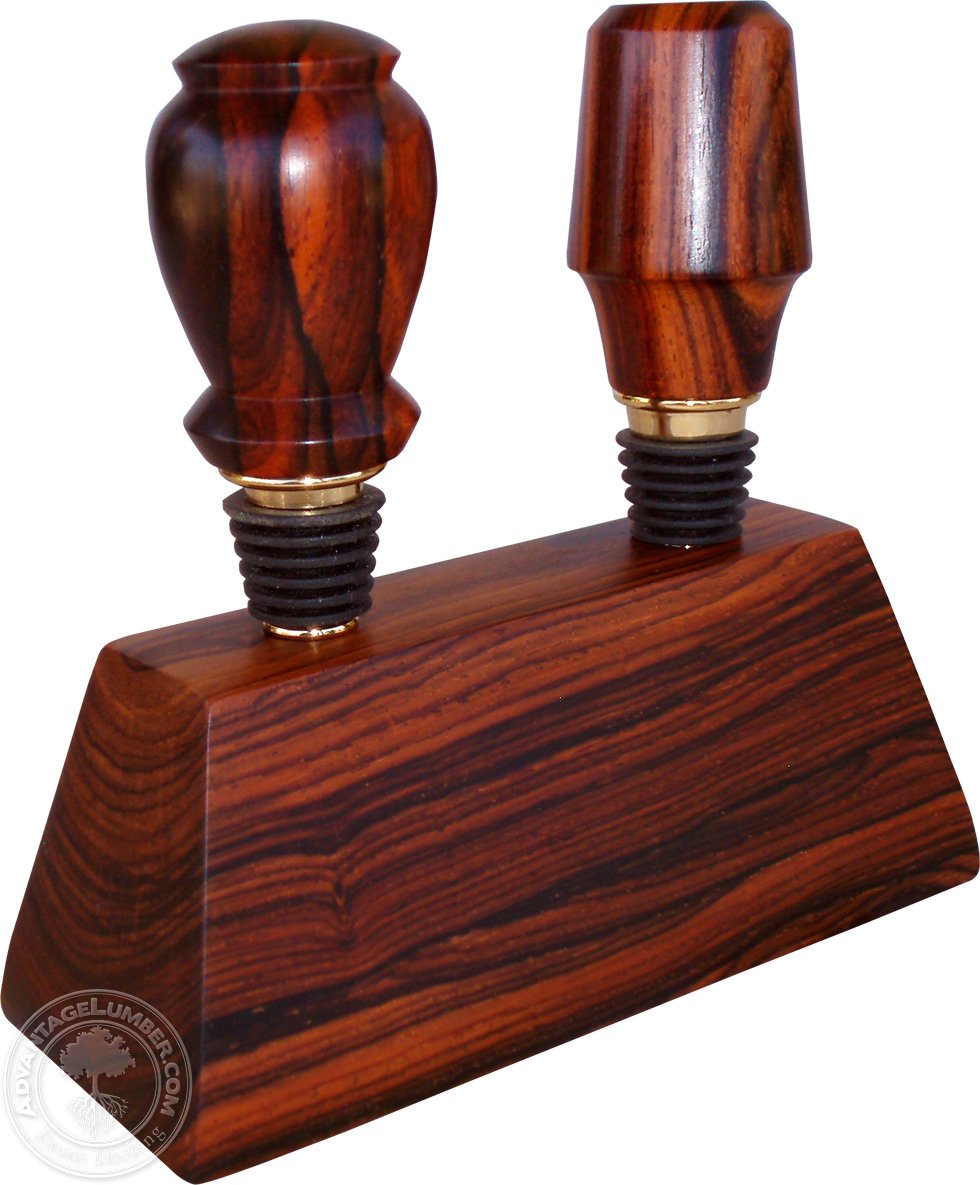
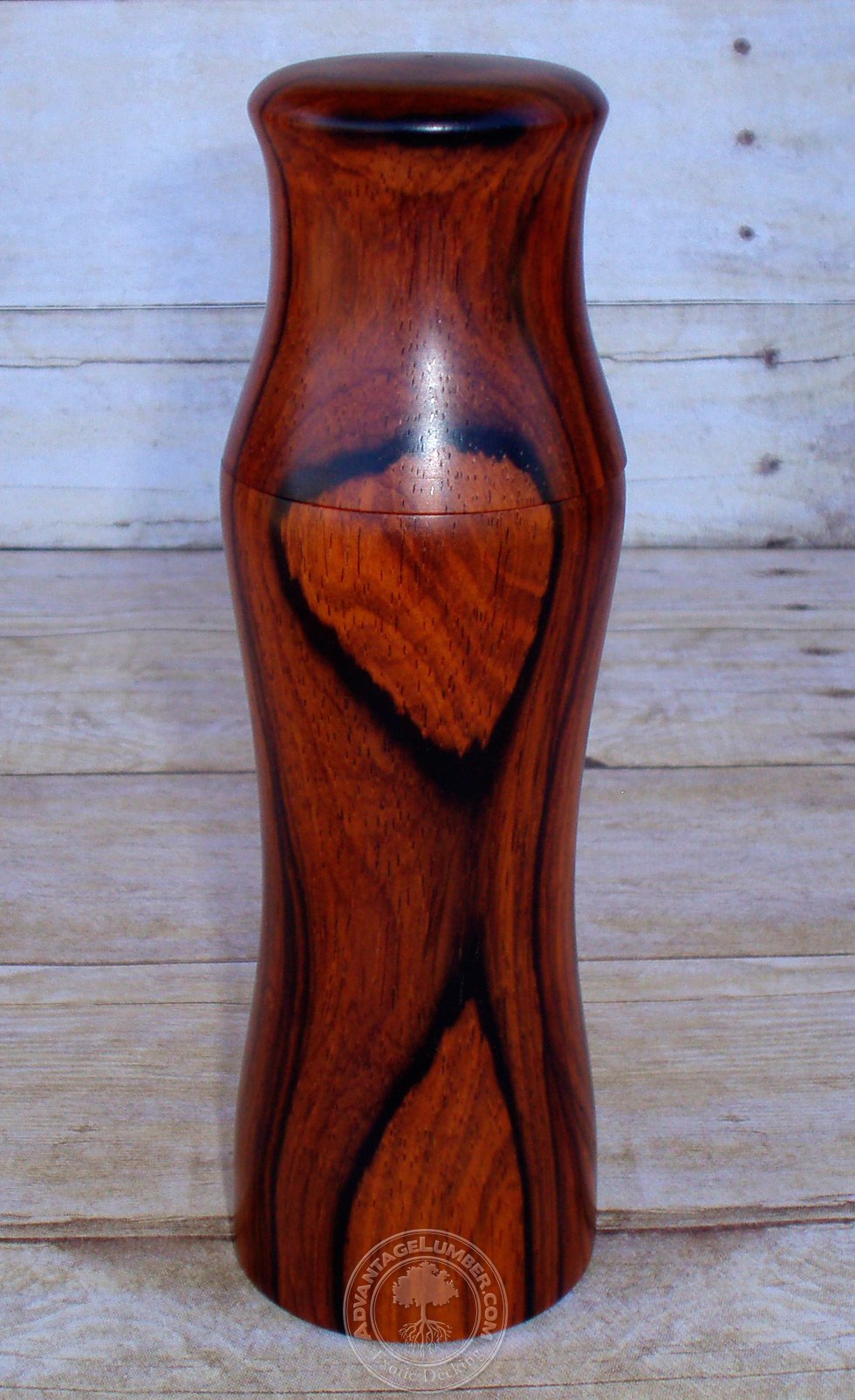
Turning, cutlery handles, tool handles, wine bottle stoppers, bowls, truncheons, fancy goods, executive pens, wood game calls, jewelry boxes, wooden jewelry, decorative items and inlay.
Also a perfect wood for unique, exotic looking hardwood flooring. |
| COMMENTS |
Cocobolo wood dust is a moderate irritant to many. |