Cumaru
Cumaru Lumber

Cumaru Also Available In:
Decking
Deck Tiles
Shiplap Siding
Rainscreen Siding
Fencing
Ceiling
Lumber
Flooring
Slabs
PHOTO |
|
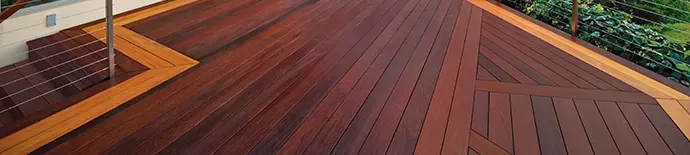
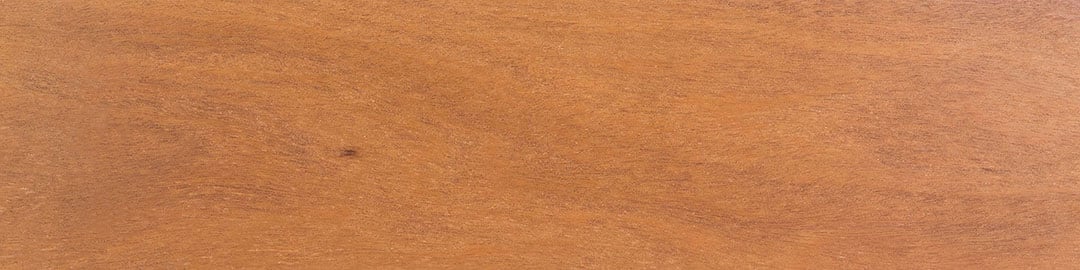
| DESCRIPTION | Color varies from a golden tan to a reddish brown with some dark grain accents throughout the wood. |
| COUNTRY OF ORIGIN |
South America (Brazil) |
| BOTANICAL NAME | Dipteryx Odorata |
| OTHER NAMES | Almendrillo, Brazilian Teak, Tonka, and Tonquin Bean |
| MECHANICAL PROPERTIES | This wood has a bending strength of 14,793 psi. |
| WORKING PROPERTIES | Difficult to saw and bore. Where severely interlocked grain is not present, the wood planes to a smooth surface. Because of its high density and oily nature, the wood glues poorly. It nails and screws well; pre-boring is necessary. |
| DURABILITY | Cumaru is very durable. The heartwood has shown to be very durable in resistance to both brown-rot and white rot fungi. The wood has excellent weathering characteristics. |
| SEASONING | Cumaru is rated as easy to air-season with a slight tendency to check and with moderate warping; drying was uniformly rapid. |
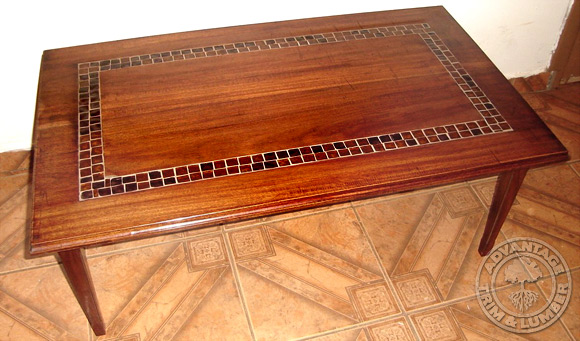
| USES | Outdoor Decking, flooring, cogs and shafts, heavy construction, barge and dock fenders, railroad crossties, pulp mill equipment, tool handles, bearings, turnery. A substitute for lignum vitae. |
| COMMENTS | The cumaru tree is cultivated in many areas for the tonka beans used as a flavoring, which have a vanilla-like flavor. |
Cumaru Lumber Prices
6/4 Cumaru Lumber

$9.75
Buy Online
8/4 Cumaru Lumber

$8.90
Buy Online
4/4 Cumaru Lumber

Starting From
$7.95
Buy Online
4/4 Cumaru Lumber, 50 Board Foot Bundle Special
5/4 Cumaru Lumber

$8.50
Buy Online
> All Prices Are Subject To Change Without Notice <
Additional Photos
Find Out More About Cumaru Decking
Click HERE to go to the Cumaru Decking price list.