ipe decking hours

Massaranduba Decking Information

Everything you need to know about Massaranduba Decking.
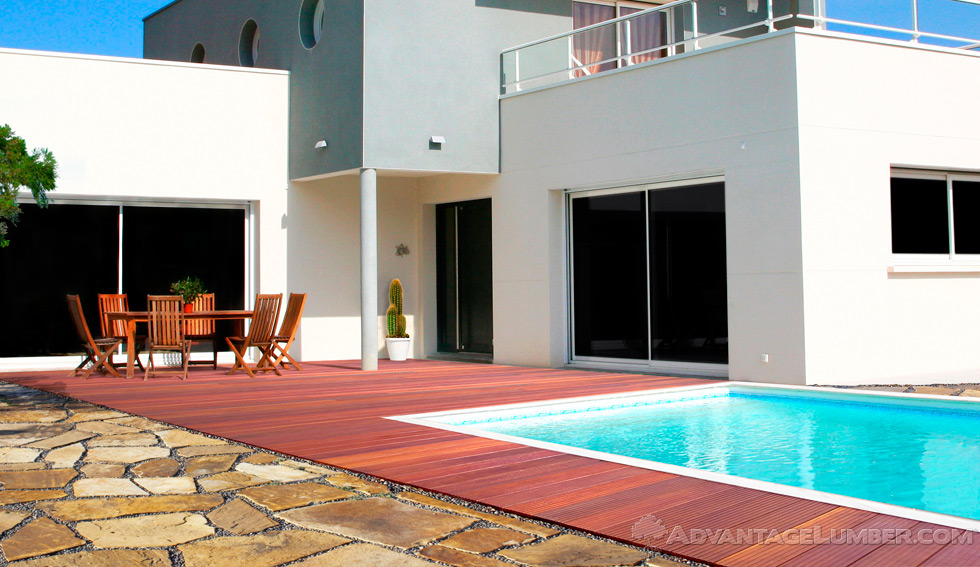
massaranduba deck
Discover More About Massaranduba Decking:
  current page    
Massaranduba Decking Specs Install Instructions Price

Massaranduba Specifications

massaranduba deck boards
Trade Name: Massaranduba

Botanical Name: Manilkara spp.; Manilkara bidentata, Manilkara amazonica, etc.

Common Names: Brazilian Redwood, Bulletwood, Acana, Aus, Ausabo, Balata, Balata franc, Balata gomme, Balata rouge, Beefwood, Bolletri, Bolletrie, Chicozapota, Macaranduba, Maparajuba, Massarandu, Nispero, Pamashto, Paraju, Quinilla colorada, Red balata

Countries of Origin : Central America, South America including Brazil, Guyana, Mexico, Panama, Colombia, Venezuela, Brazil, French Guiana, Peru, Suriname

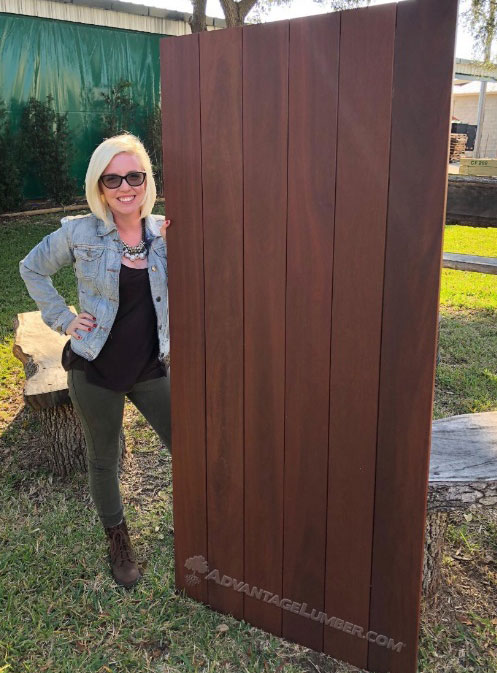
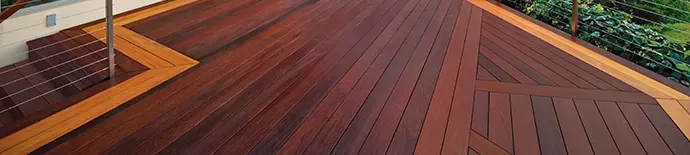
Color: Heartwood is light red when freshly cut and darkens to a red to dark reddish brown. Sapwood is light pink to brown. If left untreated, a Massaranduba deck will weather to a fine, silver/gray.

Grain: Distinctive growth rings with a straight grain. Very fine texture.

Massaranduba - Tests Result What These Numbers Mean for Your Massaranduba Deck?
Bending Strength (psi) 27,280 Your new deck will be able to handle snow loads better than a softer, less sturdy wood.
Max. Crushing Strength (psi) 11,640 It takes over 2x the amount of compressive force to crush Massaranduba as it does California Redwood. So, if you're worried about having an iron made outdoor furniture, or a full outdoor kitchen, don't be. It will take more than that to crush Massaranduba.
Stiffness (1000 psi) 3,450 Luthiers and violin makers pay close attention to a wood's stiffness properties because it helps ensure a wood instrument will tune properly. For deck owners, the fact that Massaranduba is around 3x stiffer than California Redwood should tell you how durable this exotic hardwood is.
Work to Maximum Load (inch-lbs/in3) 28 WML is the ability for a wood to absorb shock with some permanent deformation. Imagine dropping a bowling ball on your deck. The likelihood of damage is greater with softer wood, but not so much with Massaranduba.
Janka Hardness (lbs) 3,190 You would have to stack nine, 350 pound outdoor dining sets on top of each other to put a visible dent into Massaranduba.
Shearing Strength (psi) 2,500 The force it takes to break wood across the grain. If you used Massaranduba for beams, or post material, your beams would be over 2.5 times more resilient against top loads than California Redwood.
Specific Gravity 1.03 Massaranduba is 1.03 times denser than water. If you placed a 5/4x6 board into water, it would displace the water and sink. Put another way, Massaranduba is the Bruce Lee to California Redwood's Pee Wee Herman.
Radial Shrinkage 6.3% These properties determine just how much Massaranduba will contract and expand due to moisture. What's important to know here is how Massaranduba will perform throughout the year. It's chosen throughout Europe because of how stable and reliable it can be.
Tangential Shrinkage 9.4%
Volumetric Shrinkage 16.9%

Compare Massaranduba to Other Wood Decking Options

Below is a chart comparing Massaranduba to many other popular wood decking options. Read the following comparison and then give us a call1.877.232.3915. By any measure (hardness, strength, durability, appearance), our Massaranduba Decking is proven to be the superior decking material.

Don't take our word for it. Call us1.877.232.3915 to order a sample. You'll see how our Massaranduba Decking speaks for itself!

Click here for the Massaranduba Decking online price list.

Specie Appearance Hardness Bending Strength Decay Resistance
Massaranduba Decking Red to dark reddish brown with straight grain and a fine texture 3190lbs 27,280 psi Very durable and naturally resistant to decay and insects. Offers up to 20+ year lifespan.
Douglas Fir A light reddish-brown wood with generally straight grain. 670 lbs. 12,400 psi Not naturally resistant to decay. Should be painted or stained to prevent decay.
Pressure Treated Pine Very pronounced grain. Dusty yellow-green color due to chemical treatment of the wood. 690 lbs. 14,500 psi A chemical preservative, chromated copper arsenate is forced into the wood.  Offering resistance to decay, but also potential health concerns.
California Redwood Several grades available that vary considerably in appearance and quality. Usually straight grained with a fine, even texture. Color varies from cherry-red to dark reddish-brown 480 lbs. 10,000 psi Premium grades are more durable than most woods in common use. Resistant to decay, but relatively soft and quick to weather. Treatment is recommended.
Western Cedar Fresh cut, this wood appears a salmon pink color which turns a coffee brown over time. Species is generally straight grained. 580 lbs. 7,500 psi This softwood is more durable than most woods in common use. Resistant to decay, but relatively soft and quick to weather. Treatment is recommended.
Philippine Mahogany Interlocked grain similar to true mahogany, but with a courser texture. Species is generally medium to dark brown. 760 lbs. 12,000 psi Only the dark red species is decay resistant. More durable than cedar & redwood.

Span Chart for Massaranduba Decking
 Nominal Dimension Finish Dimension Joist Spacing
1x4 3/4" x 3 1/2" 16"
1x6 3/4" x 5 1/2" 16"
5/4x6 1" x 5 1/2"  24"
2x6 1 1/2" x 5 1/2" 32"

Note:  Massaranduba is a very strong material.  The joist spacing shown is very conservative and designed to pass most area building codes and to have nearly zero deflection under standard loads.  The joist spacing shown is also valid if the decking is laid in a diagonal pattern to the joist.  The spans shown are typically used even with heavy loads such as hot tubs.

Find Out More About Massaranduba

Click HERE to go to see the available sizes and Massaranduba Decking prices.

ADVANTAGELUMBER.COM®
As seen on/in
FineHomebuilding.com WOODWEB professional deck builder
PROUD members of
NADRA Appalacian Lumbermans Club Home Builders Association of Manatee County U.S. Green Building Council