Ipe FAQ
How to maintain ipe decking?
Clean the surface of the ipe deck periodically to remove dirt, pollen, and debris, and apply a high-quality hardwood deck oil once or twice a year if you want to preserve its rich brown color. If you prefer the natural silver-gray patina, you can skip the oil without affecting the wood's durability.
Can you keep ipe wood untreated?
Yes. Ipe can be left completely untreated thanks to its exceptional natural resistance to rot, insects, and decay. Without a UV-protective finish, the wood will gradually develop a silver-gray patina.
Does ipe turn grey?
Yes. Ipe can be left completely untreated thanks to its exceptional natural resistance to rot, insects, and decay. Without a UV-protective finish, the wood will gradually develop a silver-gray patina.
How often should I oil Ipe decking?
If you want to maintain Ipe's rich brown color, apply a high-quality hardwood deck oil about once every year or two years, depending on your climate and sun exposure. If you're happy with the natural silver-gray patina, regular oiling isn't necessary, though periodic cleaning is still recommended to keep the deck looking its best.
Where to buy premium ipe wood?
We have earned a reputation as one the most trusted names in luxury building materials and we offer ipe at factory direct prices.
How many ipe boards do I need for my project?
The number of Ipe boards you'll need depends on your project's dimensions, board width, and installation pattern. It's also a good idea to order an additional 5–10% to account for cuts, waste, and board selection. We also have a calculator that you can use to determine the number of boards you will need.
Can I buy custom-milled Ipe?
Yes, we do offer custom milling. Just give us a call at 1-877-232-3915 and tell us what you need.
How is ipe shipped?
After your order is placed, processed, and payment is approved, products typically ship by common carrier freight.
Can I get ipe samples?
Yes, many of our ipe boards have a the size "Sample" listed on the product page.
What grade of ipe do you carry?
At AdvantageLumber.com, we sell two grades of Ipe decking, Grade A (Premium Grade) and Grade B (Rustic Grade).
What sizes does Ipe lumber come in?
Ipe lumber is available in a variety of thicknesses, widths, and lengths to suit everything from decking and siding to furniture and custom woodworking projects.
What is ipe?
Ipe is an exceptionally dense tropical hardwood native to Central and South America. Known for its outstanding durability, natural resistance to rot and insects, and long lifespan, Ipe is widely considered one of the best materials for decking and other exterior applications.
What is brazilian walnut?
Brazilian Walnut is the common name for Ipe, a tropical hardwood prized for its exceptional strength, durability, and rich brown color. Although it's called "Brazilian Walnut," Ipe is not a true walnut species and is much harder and more durable than domestic walnut.
Why is Ipe considered one of the best decking materials?
Ipe is considered one of the best decking materials because it combines exceptional durability, natural resistance to rot, insects, and fire, and a lifespan that can exceed 50 years with proper installation. Its dense grain, beautiful appearance, and low maintenance requirements make it a popular choice for homeowners, architects, and builders alike.
How durable is ipe?
Ipe is one of the most durable hardwoods in the world. Its exceptional density and natural resistance to rot, insects, and harsh weather make it an ideal choice for decks, docks, siding, and other exterior applications.
Is ipe resistant to rot?
Yes. Ipe is naturally resistant to rot, decay, termites, and other wood-boring insects without the need for chemical treatments. Its dense structure and natural oils help it withstand moisture and outdoor exposure for decades.
What are the best uses for Ipe wood?
Ipe is commonly used for decking, docks, boardwalks, siding, fencing, outdoor furniture, pergolas, and other exterior projects where long-term durability is essential. Its strength, natural beauty, and resistance to rot and insects also make it an excellent choice for select interior applications, such as flooring and stair treads.
How hard is ipe wood?
Ipe is one of the hardest commercially available hardwoods, with a Janka hardness rating of approximately 3,680 lbf. Its exceptional density makes it highly resistant to dents, scratches, and wear, but it also requires pre-drilling during installation.
Is ipe worth the cost?
For many homeowners, Ipe is worth the investment because of its exceptional durability, low maintenance requirements, and long lifespan. While the upfront cost is higher than many decking materials, its longevity and timeless appearance can provide excellent long-term value.
What does ipe look like?
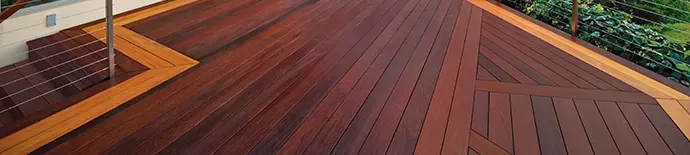
Ipe has a rich, natural appearance with colors ranging from olive brown to dark brown, often accented by lighter or darker grain patterns. Over time, untreated Ipe develops an elegant silver-gray patina, or it can be oiled periodically to maintain its original color.
Is ipe sustainble?
Yes, Ipe can be a sustainable decking material when it is responsibly harvested from well-managed forests. Responsible hardwood producers carefully select trees and harvest them in a way that minimizes damage to the surrounding ecosystem. For every tree that is cut down, several more are planted, ensuring that the forest thrives.
What lengths are available in Ipe boards?
Ipe decking and lumber are available in a variety of lengths to accommodate projects of all sizes. Our product pages list the sizes that we offer.
Does ipe get slippery?
Ipe is not naturally slippery, but like any decking material, it can become slick when wet or covered with algae, mold, or debris. Regular cleaning helps maintain traction and keeps your deck looking its best.
Is Ipe better than composite decking?
The better choice depends on your priorities. Ipe offers unmatched natural beauty, exceptional durability, and a lifespan of 50 years or more. However, composite decking requires less routine maintenance and is available in a wide range of colors.
What is the difference between Ipe and Cumaru?
Ipe and Cumaru are both premium tropical hardwoods known for their strength and durability. Ipe is generally denser, darker in color, and has a longer proven track record for exterior applications. Cumaru offers similar performance at a lower price point, making it an excellent alternative for homeowners looking to balance performance and budget.
Is Ipe available in S4S lumber?
Yes. Ipe is commonly available in S4S (Surfaced Four Sides) lumber, which is planed smooth on all four sides and ready for woodworking and finishing. S4S Ipe is a popular choice for furniture, trim, millwork, and other projects that require a finished appearance.
Is Ipe fire resistant?
Yes. Ipe has a Class A fire rating, the same rating earned by concrete and steel, making it one of the most fire-resistant natural woods available. This added level of protection makes it a popular choice for homes in wildfire-prone areas and commercial applications.
What is the lifespan of Ipe wood?
Ipe is one of the longest-lasting hardwoods available, with a lifespan up to 75 years when properly installed and maintained. Its natural resistance to rot, insects, moisture, and wear allows it to perform exceptionally well in demanding outdoor environments.
Why choose ipe?
Ipe is an excellent choice for homeowners and builders seeking a beautiful, long-lasting building material with exceptional durability and natural resistance to rot, insects, and fire. Its timeless appearance, minimal maintenance requirements, and decades of reliable performance make it one of the best investments for outdoor living spaces.
Does ipe need to be pre-drilled?
Yes. Ipe is an extremely dense hardwood. Pre-drilling is recommended to help prevent fastener breakage and ensure a secure installation. Many installers also use a countersink bit for a clean, professional finish when face fastening.
What fasteners should be used with Ipe decking?
High-quality stainless steel fasteners are recommended for Ipe decking because they resist corrosion and provide long-lasting performance. For coastal environments, 316 stainless steel fasteners offer the best protection against salt air and moisture, while hidden fastening systems are also available for a clean, fastener-free surface.
Does ipe wood need to be acclimated before installing?
Yes. Allowing Ipe to acclimate to the jobsite helps the wood adjust to local temperature and moisture conditions before installation. For more information, see our Decking and Wood Ceiling guides.